Wednesday, 25 June 2025
Health Update
Just starting to realise how much my body is breaking down as have I suspect sciatica and tennis elbow which has made need to test and take painkillers for next few days properly phone up for doctors appointment today on writing post .Suspect I maybe over training again plus now over 63 years old I got expect more of these flair ups it may be time to soon make a few big changes which I know I have to stick too,update as soon as I know what I do
.png)
.png)
.png)


Sunday, 22 June 2025
How to Support Your Karate Team's Journey to the World Championships
How to Support Your Karate Team's Journey to the World Championships
Competing at the WKU World Karate Championships is a huge goal for many martial arts athletes. It’s a chance to show hard work on an international stage. But getting there isn’t cheap or easy. Many teams struggle with the costs and need help from the community, sponsors, and supporters to make it happen. This guide will break down what it takes, how you can help, and why your support matters.
Understanding the Costs of Competing at the World Level
The Financial Breakdown of International Karate Competitions
Going to a world tournament means covering many expenses. Registration fees for each athlete can add up fast. There are also costs for categorizing your events—like weight classes and divisions. Travel is usually the biggest expense, with flights to and from the host country. Local transportation, taxis, and buses also cost money.
Once at the event, athletes need accommodation and meals for the duration of the competition. Squad training sessions and practice days before the event also require funding. These sessions build team unity and help athletes prepare mentally and physically.
Additional Expenses to Consider
Beyond flights and hotels, there are other costs like equipment or extra uniforms needed for competition. Insurance and licenses are required, especially when working with children or vulnerable adults. Traveling within the country or city for tournaments can also get costly.
Post-competition expenses aren't always smooth—recovery costs, additional training, or injury treatment need to be planned. Without support, many talented athletes find it hard to cover these expenses and focus solely on their performance.
How to Support Karate Athletes and Teams
Fundraising and Community Donations
One way to help is organizing fundraising events. Think bake sales, charity matches, or local tournaments to gather funds. Online crowdfunding sites like GoFundMe can also reach a bigger audience.
Engaging local businesses is another strategy. Small shops, cafes, or service providers might want to sponsor the team for exposure. Share the story of your team and their goals—they may be more willing to help when they see the passion behind it.
Creating awareness through social media campaigns can inspire others to donate or get involved. Every small contribution counts in helping athletes reach their dreams.
Sponsorship Opportunities
Approaching local and national companies can open doors to big support. When pitching to sponsors, emphasize the community value, brand visibility, and opportunities to be part of something bigger.
Building long-term partnerships with sponsors takes time. Be clear about what you offer—logos on uniforms, social media mentions, or event banners. But remember, the biggest challenge is securing sponsorships because many firms have limited budgets.
Offering a clear story about your team and their achievements can make the difference. Use testimonials from athletes or past success stories to stand out.
Grants and Government Support
Many towns and cities have sports development grants or funds set aside for youth activities. These grants are a great way to get dedicated funds for travel, gear, or training camps. Check your local council or sports authority websites for application tips.
Writing strong applications that highlight your team’s community impact and future potential increases your chance of success. Don’t forget to include clear budgets and goals when applying.
Building a Strong Team Culture and Preparing for Competition
The Importance of Squad Training and Camaraderie
A close-knit team performs better. Regular squad training helps players learn from each other and build respect. Monthly sessions create a strong bond and teach athletes to support one another.
During tournaments, knowing your teammates makes a big difference. Support from others boosts confidence and reduces nerves. It’s about more than just fighting; it’s about team spirit.
Developing a Positive Mindset and Sportsmanship
Many champions say enjoying the journey beats chasing medals. When you focus on learning, wins and losses become part of growth. Respect for opponents shows true sportsmanship and keeps the sport fair.
Teaching resilience is key. Some athletes get nervous or lose matches, but they learn from them. A good attitude helps build character beyond the mats.
Practical Tips for Athletes
Encourage athletes to stay curious and always learn. Balance intense training with proper rest. Managing stress is just as important as physical strength. Teaching mental toughness helps them stay calm in tough situations.
Remind athletes it’s okay to make mistakes—they’re part of the learning process. Celebrate progress, not just medals.
The Role of Traditional Karate in Modern Competition
The Value of Kata and Self-Defense Techniques
Kata isn’t just forms; it teaches discipline, focus, and power. These sequences help fighters understand balance and timing. In real life, many self-defense moves come from basic kata techniques.
For example, a simple block can be used to control or redirect an attacker. It’s not just moves—each kata emphasizes awareness and control, key for both fighting and self-protection.
Incorporating Cross-Training and Broader Martial Arts
Many fighters find it helpful to learn from other arts like judo or boxing. This makes them more versatile and adaptable. For example, a karateka who trains with a boxer might learn different angles or punches.
Trying out different styles broadens a fighter’s understanding of combat. It can also make their karate more effective in unpredictable situations.
Staying Authentic While Evolving
While you want to succeed in competitions, it’s also essential to stay true to traditional values. Respectfulness, discipline, and self-control remain the heart of karate. Blending new techniques with old-school principles creates a balanced fighter.
Keeping your foundation strong helps you grow without losing your roots.
Legal, Safety, and Ethical Considerations in Martial Arts
Licensing, Insurance, and Safeguarding
Martial arts instructors work with many children and vulnerable adults. That’s why being licensed and insured is a must. It protects both students and teachers.
Policies should include safeguarding children and managing risks. Background checks and proper vetting build a safe environment for everyone. Schools and clubs that follow these steps are trusted by parents.
Ethical Conduct and Respectful Practice
Respect is at the core of martial arts. Teachers need to set good examples, prevent misconduct, and promote fair play. Discipline helps create a positive environment.
Building trust within your team makes everyone feel safe and valued. When issues happen, address them quickly and fairly.
Self-Defense and Real-World Preparedness
Training should prepare students to stay calm and avoid fights. Running away is often the best move. When needed, practical self-defense techniques help defend yourself.
Teaching mental toughness helps athletes handle dangerous situations better. The goal isn’t to fight but to survive and stay safe.
How to Get Involved and Join the Team
Contacting Your Local Karate Club
Most clubs are eager for new members. Check websites, social media pages, or attend open days. Talking to instructors helps you understand what’s involved.
Building a relationship with the coach makes starting easier. They can guide you through beginner programs or trial classes.
Supporting Beyond Competition
Volunteering at events, helping with fundraising, or spreading the word boosts the team’s chances. These efforts grow the sport and create a stronger community.
Promotion is vital. The more people know about your team, the more support you can gather.
Opportunities for Aspiring Athletes
Starting small, with local competitions and training programs, builds skills step by step. Progression from local to national and then international tournaments is possible with dedication.
Stay motivated, keep learning, and focus on steady growth. Success comes from continuous effort.
Conclusion
Getting your karate team to the world championships involves more than just effort on the mats. It takes funding, community support, and a shared belief in growth and sportsmanship. Every donation, sponsorship, and volunteer makes a difference. Supporting your local team helps turn dreams into reality and builds a stronger martial arts community.
If you want to see young athletes succeed, start by getting involved. Whether through donations, volunteering, or simply spreading the word, your support is invaluable. Help your team climb higher and bring home the next world title.
Write a Very Scary Horror Story: A Step-by-Step Guide to Crafting Terror
Creating a sensational horror story isn’t just about blood and monsters. It’s about making your readers feel real fear—deep, unsettling, and in their bones. The best horror tales don’t just make you jump; they mess with your mind and linger long after you’ve finished reading. So, how do you write a story that truly terrifies? Let’s break down the secrets step by step.
Understanding the Foundations of a Very Scary Horror Story
What Makes a Horror Story Truly Scary?
A good horror story taps into two main kinds of fear: what’s supernatural and what’s psychological. Sometimes, that creepy old house is haunted by spirits, and sometimes, it’s the way a character’s mind begins to unravel. Both kinds hook us because they hit something familiar—fear of the unknown or our own vulnerabilities. Unpredictability keeps readers guessing, while well-built tension keeps them glued. Plus, cultural fears—like fear of death, darkness, or loss—shape what a horror story can really scare us with.
Key Elements of Horror Writing
To write terrifying horror, you need to master some core tools:
Atmosphere and mood creation: Think dark woods or abandoned halls. Use descriptive words to set a spooky tone.
Suspense and pacing: Slow build-ups and sudden shocks work together to keep eyes wide open.
Relatable characters: Readers should care about your characters. When they face terror, the fear is real, not flat.
Analyzing Successful Horror Stories
Look at great stories by Stephen King, like It, or Shirley Jackson’s The Haunting of Hill House. These stories succeed because they combine compelling atmosphere, well-rounded characters, and clever plot twists. For example, King’s pacing makes the fear grow steadily, pulling readers in with every chapter.
Crafting a Nightmarish Setting
Choosing the Perfect Location
The setting is your story’s backbone. Isolated cabins in the woods, haunted houses, or abandoned asylums all work well because they isolate characters and increase vulnerability. These places seem normal but turn into nightmares—perfect for fear.
Descriptive World-Building Techniques
Use all five senses. Describe the creak of old floorboards, the smell of decay, or a chilling wind. A storm brewing outside can add to the tension, making every moment unpredictable. The environment becomes a character itself, whispering secrets and hiding dangers.
Using Settings to Amplify Terror
Certain places symbolize the danger they hold—crime scenes or cursed locations. Real-world fears—like fear of dark places or being trapped—are heightened in these environments. Statistics show that many people feel more anxious in confined or unfamiliar spaces, perfect for horror stories.
Developing Terrifying Characters and Antagonists
Creating Unforgettable Villains
Iconic villains like Freddy Krueger or Michael Myers scare because they’re more than just scary—they have backstories and motives that make them feel real. Giving your villain mysterious origins or strange habits adds layers that deepen fear.
Crafting Relatable Protagonists
Your characters should have flaws and fears of their own. When they stumble or panic, readers identify with them, amplifying the horror. Showing vulnerability or regret can make your characters more genuine and their peril more intense.
Incorporating Unknown or Supernatural Elements
Mystery heightens fear. What is that shadow lurking in the corner? Supernatural entities like ghosts, demons, or curses terrify because they challenge our understanding of reality. The unknown keeps readers guessing and heart pounding.
Building Suspense and Pacing
Techniques for Creating Tension
Use cliffhangers, misdirection, and sudden reveals. For example, don’t let every scare be obvious. Nudge readers to expect one thing, then hit them with something unexpected. Timing is everything—save the jump scares for moments when they’ll hit hardest.
Structuring the Narrative
Build your story with rising action, a tense climax, and a satisfying or unsettling ending. Short chapters or quick-scenes keep the pace tight, making readers feel like they’re running out of breath as the story unfolds.
Practical Tips from Experts
Stephen King says pacing is key. He recommends balancing quiet moments with intense ones. Clive Barker emphasizes the importance of timing horror scenes for maximum impact—too many shocks spoil the effect.
Utilizing Psychological Horror and Fear
Exploring Deep-Seated Fears
Fear of death, loss, or darkness is universal. Craft your story around these fears. What makes a character panic? What are their hidden vulnerabilities? Use these as a foundation to create authentic horror.
Creating Ambiguous or Unreliable Narrators
An unreliable narrator keeps your audience guessing. Maybe what’s real isn’t. Films like The Others or books like The Turn of the Screw use this trick to increase suspense and make terror feel personal and confusing.
The Power of Silence and Sound
Sound effects—or silence—can make or break tension. Carpenter’s Halloween uses silence as a weapon, making every creak and footsteps feel like a threat. Use sounds to create anticipation and terror.
Writing Techniques to Maximize Horror Impact
Language and Descriptive Style
Use vivid, visceral words that paint pictures in the reader’s mind. Avoid clichés like “dark and stormy night,” unless you twist them into something fresh. Be original with your descriptions to keep readers on edge.
Incorporating Twists and Surprises
Subvert expectations. Maybe the monster isn’t outside but inside the house all along. Great horror stories keep readers guessing until the very end with clever plot twists.
Leveraging Cultural and Mythological References
Draw from collective fears—like myths about monsters or stories from folklore. These can deepen your story and evoke a sense of timeless dread.
Conclusion
Writing a very scary horror story is more than just adding monsters or gore. Focus on atmosphere, relatable characters, and suspenseful pacing. Dive deep into psychological fears and use settings to amplify terror. Push your craft, experiment with tricks, and don’t shy away from darkness. When you master these elements, you create stories that haunt your readers long after they finish reading. Embrace the fear, and let it inspire your storytelling—because that’s where true terror begins.
How Our Bodies Change After the Age of 60: Understanding the Transition and Staying Healthy
As we get older, our bodies go through many changes. After 60, these shifts can affect how we move, see, hear, and think. Understanding what happens helps us take better care of ourselves and enjoy life fully. From muscles to skin, each system changes, but with the right habits, we can stay healthy. Let’s explore these changes and what you can do to keep feeling your best.
Physical Changes in Muscle Strength and Bone Density
Decline in Muscle Mass (Sarcopenia)
As we age, muscle tissue starts to shrink. This condition is called sarcopenia. It means your muscles get smaller and weaker, making everyday tasks harder. You might notice trouble lifting things or climbing stairs. Balance can also suffer, raising the risk of falls.
Osteoporosis and Bone Fragility
Osteoporosis, or weak bones, becomes common after 60. About one in three women and one in five men develop this condition. Bones lose minerals and become more fragile, increasing chances of fractures. Experts warn that falls can lead to broken hips or spine fractures.
Actionable Tips
Add resistance training like lifting light weights or using resistance bands.
Do weight-bearing exercises such as walking or dancing.
Keep your calcium and vitamin D levels high through foods or supplements.
Get regular bone density scans to catch problems early.
Changes in Cardiovascular Health
Reduced Heart Efficiency
After 60, your heart doesn’t work quite as efficiently. It pumps blood at a slower rate, and your maximum heart rate drops. That means you may get tired faster during exercise or activity.
Increased Risk of Hypertension and Heart Disease
Blood vessels tend to become less elastic with age, raising blood pressure. This stress on the arteries can lead to heart disease over time. Experts say that a bad diet and lack of exercise make these risks worse.
Expert Recommendations
Choose a diet low in saturated fats and salt.
Monitor your blood pressure regularly.
Engage in moderate aerobic activities, like brisk walking or swimming.
Get regular heart health checkups for early detection.
Sensory Decline: Vision, Hearing, and Taste
Vision Changes
Common vision issues include presbyopia, cataracts, and dry macular degeneration. By 75, nearly half of seniors have some form of vision impairment. These issues can make reading or recognizing faces difficult.
Hearing Loss
Age-related sensorineural hearing loss affects about one in three people over 60. It may make conversation difficult and cause feelings of isolation or depression.
Diminished Taste and Smell
Our senses of taste and smell weaken with age. Food can seem bland, and appetite may decrease. This can lead to nutritional gaps if not addressed.
Practical Tips
Schedule routine eye and ear exams.
Use glasses or hearing aids when needed.
Enhance food flavors with herbs, spices, or citrus to make meals appealing.
Stay socially active to keep mental and sensory health sharp.
Cognitive and Mental Health Shifts
Cognitive Function and Memory
It’s normal to forget names or where you put keys. But severe forgetfulness could signal cognitive decline. Studies show some memory loss is common, yet it doesn’t always mean serious issues.
Emotional Well-being and Mental Health
Older adults sometimes face depression or anxiety, especially after retirement or changes in health. Staying socially involved and mentally alert helps ward off these issues.
Recommended Practices
Challenge your brain with puzzles, reading, or learning new skills.
Keep social ties strong with family, friends, or community groups.
Talk with healthcare providers about memory screenings or mental health support.
Digestive System and Metabolic Changes
Slower Digestive Processes
As digestion slows down, food moves through the gut more slowly. Stomach enzymes decrease, which can cause bloating or constipation. You might not absorb nutrients as well.
Changes in Metabolism and Weight Management
Your metabolism slows, making it easier to gain weight. That’s why staying active and watching your diet is important.
Actionable Strategies
Eat small, frequent meals rich in fiber and nutrients.
Drink plenty of water and limit processed or sugary foods.
Keep up with regular health checkups to monitor metabolic health.
Skin, Hair, and Other Aesthetic Changes
Skin Elasticity and Thickness
Skin gets thinner, drier, and less elastic over time. Wrinkles, sagging, and age spots become more noticeable. This is due to less collagen and moisture.
Hair Changes
Hair may thin out or turn gray. For many, it’s a natural sign of aging that they learn to embrace.
Maintenance Tips
Use moisturizers and sunscreen daily.
Protect your skin from the sun.
Be gentle with hair washing and styling.
Eat a balanced diet that supports skin and hair health.
Conclusion
Aging after 60 brings many natural changes to your body. Muscles weaken, bones become fragile, and senses decline. Your heart works less efficiently, and your skin shows signs of aging. But knowing what to expect can help you stay healthy longer. Small steps like exercising, eating well, and staying social make a big difference. Aging doesn’t have to mean losing vitality. With awareness and effort, you can enjoy this stage of life fully and happily. Stay active, stay informed, and embrace the journey ahead.
Betty Boop: Snow White 1933
Betty Boop: Snow White
1933
Memorable rendition of "St James Infirmary" by Cab Calloway
File:Snow White (1933).webm
Snow-White is a film in the Betty Boop series from Max Fleischer's Fleischer Studios directed in 1933. Dave Fleischer was credited as director, although virtually all the animation was done by Roland Crandall. Crandall received the opportunity to make Snow-White on his own as a reward for his several years of devotion to the Fleischer studio, and the resulting film is considered both his masterwork and an important milestone of The Golden Age of American animation. Snow-White took Crandall six months to complete.
Popeye the Sailor Meets Ali Baba's Forty Thieves 1937
Popeye the Sailor Meets Ali Baba's Forty Thieves
1937
popeye, Classic cartoon, 1930s
The classic Arabian adventure, adapted for Popeye and Olive Oyl. Cartoon originally produced in 1937 by Fleischer Studios
Saturday, 21 June 2025
Horror Express
Horror Express (Spanish: Pánico en el Transiberiano, lit. "Panic on the Trans-Siberian")[4] is a 1972 science fiction horror film directed by Eugenio Martín. It stars Christopher Lee and Peter Cushing, with Alberto de Mendoza, Silvia Tortosa, Julio Peña, George Rigaud, Ángel del Pozo, and Telly Savalas in supporting roles.
Horror Express
Directed by
Eugenio Martín
Screenplay by
Arnaud d'Usseau
Julian Zimet
(as Julian Halevy)
Story by
Eugenio Martín
Produced by
Bernard Gordon
Starring
Christopher Lee
Peter Cushing
Telly Savalas
Cinematography
Alejandro Ulloa
Edited by
Robert C. Dearberg
Music by
John Cacavas
Production
companies
Granada Films
Benmar Productions
Scotia International[1]
Distributed by
Regia Films Arturo González (Spain)[2]
Gala Film Distributors (UK)[1]
Release dates
30 September 1972 (Sitges)
30 November 1973 (New York)[3]
Running time
90 minutes
Countries
Spain
United Kingdom
Language
English
Budget
$300,000
Box office
755,542 admissions (Spain)[2]
Set in 1906, the film's storyline follows the various passengers aboard a European-bound Trans-Siberian Railway train. They are soon stalked, one by one, by an alien intelligence inhabiting the frozen body of an ancient primitive humanoid brought onboard by an anthropologist.
Superman: The Mechanical Monsters 1941
Superman: The Mechanical Monsters
1941
A mad scientist unleashes robots to rob banks and loot museums. Superman saves the day. Animation by Steve Muffati and George Germanetti. Music by Sammy Timberg. Produced in 1941.
The Mechanical Monsters is the second of the seventeen animated Technicolor short films based upon the DC Comics character Superman. Produced by Fleischer Studios, the story features Superman battling a mad scientist with a small army of robots at his command. It was originally released by Paramount Pictures on November 28, 1941.
Betty Boop: Minnie The Moocher 1932
Betty Boop: Minnie The Moocher
1932
Minnie the Moocher (1932) is a Betty Boop cartoon produced by Fleischer Studios and released by Paramount Pictures.[1]
The cartoon opens with a live action sequence of Cab Calloway and his orchestra performing an instrumental rendition of "St. James Infirmary". Then Betty Boop gets into a fight with her strict, Yiddish speaking, Jewish parents, runs away from home with her boyfriend Bimbo, and sings excerpts of the Harry Von Tilzer song "They Always Pick on Me" (1911) and the song "Mean to Me" (1929).
Woody Woodpecker in Pantry Panic 1941
Woody Woodpecker in Pantry Panic
1941
Weatherby Groundhog predicts a cold winter and advises all the birds to fly south. But Woody Woodpecker decides to stay, and nearly starves. Animation by Alex Lovy and Lester Kline, story by Ben Hardaway and L.E. Elliott, music by Darrell Calker.
Pantry Panic is the third animated cartoon short in the Woody Woodpecker series. Released theatrically on November 24, 1941, the film was produced by Walter Lantz Productions and distributed by Universal Pictures.
Popeye for President 1956
1956
Popeye for President
Classic cartoon, 1950s, popeye
Popeye and Bluto are both running for president. They are tied with exactly the same number of votes, but Miss Olive Oyl has yet to cast her ballot. Which candidate will be able to impress her the most and earn her precious vote?
Scales & Tails
The bell above the door of "Scales & Tails" chimed with a sickly, metallic tang, a sound that always made Rico’s teeth itch. He glanced up from scrubbing the stubborn grime off the reptile enclosures. His wife, Maria, was behind the counter, her face a mask of polite boredom as she helped a woman select a feeder mouse for her snake.
Rico hated this place. He hated the smell of sawdust and fish flakes, the constant chirping of crickets, and the way Mr. Abernathy, the owner, watched them with those unsettlingly bright, bird-like eyes.
Rico and Maria were trying to make a new start. Fresh out of prison for a robbery gone wrong, Rico was determined to stay on the straight and narrow. Maria, loyal to a fault, had waited for him, and together they’d scraped together enough money for a deposit on this cramped apartment above the laundromat. Mr. Abernathy had been their only option for work. No questions asked, no background checks. That should have been a red flag, but they were desperate.
Abernathy himself was a strange bird. He was a gaunt man with skin stretched taut over his skull, making him look perpetually surprised. He claimed to be a retired veterinarian, but the way he handled the animals felt clumsy, more like a scientist poking at specimens than a caregiver. He spent most of his time in the back room, a place strictly off-limits to Rico and Maria. He’d told them it was for “sensitive procedures” and “quarantining new stock.” They suspected it was just a glorified nap room.
But lately, things felt different. Abernathy had started staring at them, not with the detached curiosity of before, but with a disturbing intensity. He kept asking them strange questions: how much sleep they got, what they ate, how they felt. He even offered them vitamins, weird, oversized capsules that tasted faintly metallic. Maria refused to take them, but Rico, wanting to be a good employee, swallowed them down with a grimace.
One night, Rico woke up soaked in sweat, a terrifying dream clinging to the edges of his mind. He’d been in a cage, surrounded by chirping crickets and the stink of ammonia. Abernathy had been there, his eyes glowing with a feverish light, injecting him with something through the bars. He tried to shake it off, blaming it on the stress of adjusting to life on the outside.
But the dreams persisted, growing more vivid, more real. He started experiencing strange physical symptoms too: fleeting moments of disorientation, phantom pains in his limbs, and an overwhelming urge to burrow.
Maria noticed the change. "You're acting weird, Rico," she said one evening, her eyes filled with worry. "You're jumpy, you're talking in your sleep… You're like a different person."
That’s when Rico decided to investigate the back room.
He waited until Abernathy left for the night, locking the door behind him as usual. Maria stood guard at the front, a nervous watchman against the chime of the bell. Rico took a deep breath and inserted a bobby pin into the complex lock. His fingers, rusty from disuse, worked with surprising dexterity. Finally, with a soft click, the door swung open.
The air inside was thick with the smell of formaldehyde and something else… something acrid, like burnt flesh. The room was a grotesque parody of a veterinary clinic. Surgical instruments lay haphazardly on a steel table, stained with dried blood. Jars filled with murky fluids sat on shelves, containing what looked disturbingly like human organs.
Then he saw the cages.
They were animal cages, but larger, reinforced with steel bars. And inside… inside were the remains of animals twisted and contorted into unnatural shapes. A rabbit with too many limbs, a dog with eyes that glowed like embers, a cat that hissed with a voice too deep for its size.
Rico’s blood ran cold. He stumbled back, his hand landing on a stack of notebooks. He opened one, his heart hammering against his ribs. The pages were filled with meticulous notes, diagrams, and equations. The heading on the first page read: "Project Chimera: Subject Acquisition & Integration."
He flipped through the pages, his eyes scanning the dense text. Abernathy wasn't just experimenting on animals. He was experimenting on people. He was trying to create… something else.
He found a section detailing the vitamins Abernathy had been giving him. They weren't vitamins at all. They were a cocktail of hormones and gene-altering compounds, designed to slowly transform his DNA, to… integrate him with animal DNA.
He understood now. The dreams, the physical changes, the disturbing impulses… He was being changed, twisted into something monstrous.
He slammed the notebook shut and turned, desperate to escape. But as he reached the door, he heard a soft click behind him.
Abernathy stood in the doorway, a syringe in his hand. His eyes gleamed with an unholy light. "Disappointing, Rico," he said, his voice barely a whisper. "I had such high hopes for you. But you had to go and spoil the surprise."
Rico lunged, but Abernathy was faster. He jabbed the syringe into Rico’s arm, and a searing pain ripped through his veins.
He stumbled back, clutching his arm. He felt a burning sensation spreading through his body, a terrifying transformation taking hold. He looked down and saw his hands, his skin rippling, scales forming, fingers elongating into claws.
Maria burst into the room, her eyes wide with horror. She screamed, a sound that echoed through the pet shop like a dying animal. Abernathy turned to her, a cruel smile playing on his lips.
"Ah, Maria," he said. "The perfect companion for my new creation. Perhaps… we can integrate you as well."
But Maria wasn't going to be a subject. She grabbed a heavy metal feeding bowl from the counter and hurled it at Abernathy's head. He crumpled to the floor with a sickening thud.
Rico watched, his mind reeling, his body changing. He was no longer Rico. He was something else, something monstrous, a horrifying amalgamation of human and animal.
He roared, a sound that was both guttural and human, a sound of pain and rage. He wanted to attack, to tear Abernathy apart. But he also wanted to protect Maria.
He staggered out of the room, Maria following close behind, her hand outstretched. They fled the pet store, leaving behind the cages, the jars, and the twisted remains of Abernathy's experiments.
They disappeared into the night, two fugitives, one human, one… something else. They knew they could never go back. They were on the run, hunted by the authorities, and haunted by the terrifying reality of their transformation.
And somewhere in the darkness, the experiment continued, the terrifying legacy of Scales & Tails living on in the monstrous creature that Rico had become. They would never truly be free, forever trapped in the grotesque chimera of Abernathy's twisted dreams. The bell above the door of "Scales & Tails" remained silent, but the horror within would echo through the shadows for years to come.
| |||||||||||||||||||


Thaddeus
The desert wind whipped at Dr. Thaddeus Blackwood’s worn leather coat, stinging his face with sand. He squinted, his good hand, the left, tightening its grip on the reins of his sturdy Appaloosa. The relentless sun beat down, turning the already harsh landscape into a shimmering oven. Behind him, the wagon groaned under the weight of his belongings: a medical library he'd never use, surgical instruments gleaming unused in their cases, and the meager supplies he needed to survive as a traveling scholar.
He was a ghost in his own life, a shadow of the man he could have been. The dream of bustling hospitals and grateful patients had curdled into a nightmare of antiseptic smells and the dull ache in his missing fingers. The dissecting knife, meant to heal, had become his executioner.
He spurred the Appaloosa onward, the rhythmic clip-clop a lonely counterpoint to the howling wind. He was heading for Salvation Gulch, a flyspeck of a town clinging precariously to the edge of the Arizona Territory. He'd heard whispers of its existence - a rough, lawless place where men went to lose themselves, or perhaps, to find something they didn't even know they were missing.
Thaddeus wasn't looking for redemption. He was simply looking for a place to stop running. A place to bury himself in his books, to observe life from a safe distance, to let the desert silence soothe the phantom pain in his missing fingers.
As he crested a rise, Salvation Gulch materialized below. A collection of ramshackle buildings huddled around a dusty main street, punctuated by the stark silhouettes of saloons and the glint of sunlight on weathered tin roofs. Rough-looking men lounged in doorways, their faces etched with hardship and suspicion.
He felt a pang of trepidation. This was a raw, untamed place, a far cry from the sterile halls of his medical college. But as he looked at the wide-open sky and the unforgiving beauty of the landscape, a sliver of something akin to hope flickered within him. Perhaps, in this desolate corner of the world, he could finally find a measure of peace. Perhaps Salvation Gulch, in its own brutal way, could offer him a different kind of healing. He urged his Appaloosa forward, a solitary figure silhouetted against the setting sun, riding towards an uncertain future in the heart of the Wild West.
Thursday, 19 June 2025
Sunday, 15 June 2025
Thursday, 12 June 2025
Tuesday, 10 June 2025
Saturday, 7 June 2025
Ghostman Radio Station-Woody Woodpecker in Pantry Panic 1941
Woody Woodpecker in Pantry Panic
1941
Weatherby Groundhog predicts a cold winter and advises all the birds to fly south. But Woody Woodpecker decides to stay, and nearly starves. Animation by Alex Lovy and Lester Kline, story by Ben Hardaway and L.E. Elliott, music by Darrell Calker.
Pantry Panic is the third animated cartoon short in the Woody Woodpecker series. Released theatrically on November 24, 1941, the film was produced by Walter Lantz Productions and distributed by Universal Pictures.
Ghostman Radio Station -Popeye for President
Popeye for President
1956
Popeye and Bluto are both running for president. They are tied with exactly the same number of votes, but Miss Olive Oyl has yet to cast her ballot. Which candidate will be able to impress her the most and earn her precious vote?
Popeye for President March 30 Tom Johnson
Ghostman Radio Station -Reefer Madness 1936

Advertisement
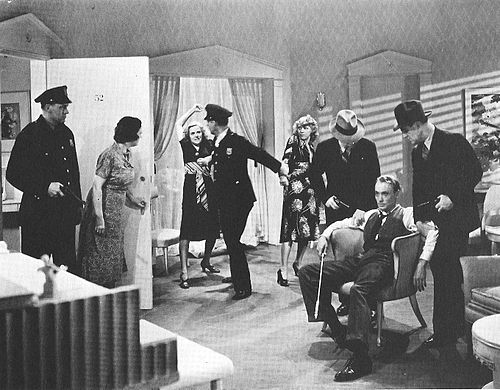
Image source: Wikimedia Foundation (wikimedia.org)
Download Movie [Video Format: MP4]
Movie Source: Internet Archive (archive.org)

Advertisement
Advertisement
Other Versions of this Movie
Reefer Madness
1936
Considered THE archetypal sensationalized anti-drug movie, but it's really an exploitation film made to capitalize on the hot taboo subject of marijuana use. Like many exploitation films of the time, "Reefer Madness" tried to make a quick buck off of a forbidden subject while skirting the Motion Picture Production Code of 1930. The Code forbade the portrayal of immoral acts like drug use. (The illegal drug traffic must not be portrayed in such a way as to stimulate curiosity concerning the use of, or traffic in, such drugs; nor shall scenes be approved which show the use of illegal drugs, or their effects, in detail.) The film toured around the country for many years - often being re-edited and re-titled ("Tell Your Children", "Dope Addict", "Doped Youth", "Love Madness", "The Burning Question"). It was re-discovered in the early 1970s by NORML (National Organization for the Reform of Marijuana Laws) and screened again as an example of the government's demonization of marijuana. NORML may have been confused about the film's sponsorship since one of the film's distributors, Dwain Esper, testified to the Arizona Supreme Court that "Reefer Madness" was not a trashy exploitation film but was actually sponsored by the U.S. Government - a convincing lie, but a lie nonetheless. That being said, the film is still quick enjoyable since it dramatizes the "violent narcotic's ... soul destroying" effects on unwary teens, and their hedonistic exploits enroute to the bottom. You can find more information regarding this film on its IMDb page. Also, if you are interested in the rich, uniquely American history of exploitation films, there are two excellent books on the subject: "Forbidden Fruit - The Golden Age of the Exploitation Film", Felicia Feaster and Bret Wood, Midnight Marquee Press, 1999. "Bold! Daring! Shocking! True! A History of Exploitation Films, 1919 - 1959" Eric Schaefer, Duke University Press, 1999.
</>< name=tcmopi></> or 1939< name=mathijs></>< name=senn></>
| runtime = 68 min. <!-- US duration: 1:08:17 -->
| country = United States
| language = English
| budget = $100,000
}}
File:Reefer Madness.webm
Reefer Madness (originally made as Tell Your Children and sometimes titled as The Burning Question, Dope Addict, Doped Youth and Love Madness) is a 1936–1939 American propaganda exploitation film revolving around the melodramatic events that ensue when high school students are lured by pushers to try cannabis (drug)—from a Hit and run (vehicular), to manslaughter, suicide, attempted rape, and descent into insanity due to marijuana addiction. The film was directed by Louis J. Gasnier and starred a cast composed of mostly unknown bit actors.
Originally financed by a church group under the title Tell Your Children, the film was intended to be shown to parents as a morality tale attempting to teach them about the dangers of cannabis use.< name="History"/> However, soon after the film was shot, it was purchased by producer Dwain Esper, who re-cut the film for distribution on the exploitation film circuit beginning in 1938/39 through the 40s and 50s.< name="History"/>
The film was "rediscovered" in the early 1970s and gained new life as satire among advocates of Decriminalization of non-medical cannabis in the United States.< name="History"/>< name="Peary"></> Although finding a popular audience as a cult film, critics have panned it as List of films considered the worst. Today, it is in the public domain in the United States.
Plot
Mae Coleman (Thelma White) and Jack Perry (Carleton Young)—a couple living in sin, sell marijuana. Mae pers to sell marijuana to customers her own age, whereas Jack sells the plant to young teenagers. Ralph Wiley (Dave O'Brien (actor)), a psychotic ex-college student turned fellow dealer (and addict, according to the film), and Blanche (Lillian Miles) help Jack sell cannabis to young students. Young students Bill Harper (Kenneth Craig) and Jimmy Lane (Warren McCollum) are invited to Mae and Jack's apartment by Blanche and Ralph. Jimmy takes Bill to the party. There, Jack runs out of reefer. Jimmy, who has a car, drives him to pick up some more. Arriving at Jack's boss' "headquarters," he gets out and Jimmy asks him for a cigarette. Jack gives him a joint (cannabis). Later, when Jack comes back down and gets into the car, Jimmy drives off dangerously, along the way running over a pedestrian with his car. A few days later, Jack tells Jimmy that the pedestrian died of his injuries. Jack agrees to keep Jimmy's name out of the case, providing he agrees to "forget he was ever in Mae's apartment". Jimmy does indeed escape the consequences of his crime—a rare occurrence in the film.Bill begins an affair with Blanche. Mary (Dorothy Short), Jimmy's sister and Bill's girlfriend, goes to Mae's apartment looking for Jimmy, and accepts a joint from Ralph, thinking it to be a normal cigarette. When she uses Ralph's advances, he tries to rape her. Bill comes out of the bedroom after having sex with Blanche, and hallucinates that Mary strips for Ralph. He attacks Ralph, and as the two are fighting, Jack tries to break it up by hitting Bill with the butt of his gun. The gun goes off and Mary is killed. Jack puts the gun in the hand of an unconscious Bill, and wakes him up. Bill sees the gun in his hand, and is led to believe that he has killed Mary. The group of dealers lies low for a while in Blanche's apartment while Bill's trial takes place. Ralph, losing his sanity, wants to tell the police who is actually responsible for the death of Mary. The film attributes Ralph's insanity to marijuana use.
File:ReeferMadness 14.jpg
Seeking advice from his boss, Jack is told to shoot Ralph so he keeps his mouth shut. Meanwhile, at the apartment, Blanche offers to play some piano music for Ralph to keep his mind off things. They are both very high, and Ralph tells her to play faster. She increases her playing speed to a downright cartoon-like speed in one of the film's most famous and over-the-top sequences. Jack shows up and Ralph immediately senses that Jack wants to kill him, so he kills Jack by beating him to death. The police arrest Ralph, Mae, and Blanche. Mae talks, and the criminal gang is rounded up. Blanche explains that Bill was innocent, and he is released. Blanche is then held as a material witness for the case against Ralph, but rather than testify against him, Blanche jumps out a window and falls to her death. Ralph is put in an asylum for the criminally insane "for the rest of his natural life." Mae's ultimate fate is unspecified.
The film's story is told in Inclusio sequences at a lecture given at a Parent-Teacher Association meeting by high school Principal (school), Dr. Alfred Carroll. At the end of the film, he tells the parents he has been talking to that events similar to those he has described are likely to happen again, and then points to random parents in the audience and warns that "the next tragedy may be that of your daughter ... or your son ... or yours, or yours ..." before pointing straight at the camera and saying emphatically "... or YOURS!" as the words "TELL YOUR CHILDREN" appear on the screen.
Cast
- Dorothy Short as Mary Lane
- Kenneth Craig as Bill Harper
- Lillian Miles as Blanche
- Dave O'Brien (actor) as Ralph Wiley
- Thelma White as Mae Coleman
- Carleton Young as Jack Perry
- Warren McCollum as Jimmy Lane
- Pat Royale as Agnes
- Josef Forte as Dr. Alfred Carroll
- James Ard as Officer Chuckman
- Harry Harvey (actor) Jr. as Junior Harper
History
File:ReeferMadness 13.jpgIn 1936 or 1938,< name=howell></> Tell Your Children was financed and made by a church group and intended to be shown to parents as a morality tale attempting to teach them about the dangers of cannabis use.< name="History"></>< name="Peary"/>< name="Commentary"></> It was originally produced by George Hirliman;<></> however sometime after the film was made, it was purchased by notorious exploitation filmmaker Dwain Esper, who inserted salacious shots.< name="History"/> In 1938< name=pdreview/>< name=tcmopi/> or 1939,< name=mathijs/>< name=senn/> Esper began distributing it on the exploitation circuit< name="History"/> where it was originally released in at least four territories, each with their own title for the film:< name=peter/> the first territory to screen it was the south, where it went by Tell Your Children (1938 or 1939< name=povrow/>). West of Denver, Colorado, the film was generally known as Doped Youth (1940< name=povrow/>). In New England, it was known as Reefer Madness (1940< name=povrow></> or 1947< name=howell/>), while in the Pennsylvania/West Virginia territory it was called The Burning Question (1940< name=peter></></>< name=anderson/> As part of a fundraising campaign, NORML showed Reefer Madness on college campuses up and down California, asking a dollar donation for admission and raising $16,000 towards support for the California Marijuana Initiative, a political group that sought to legalize marijuana in the fall '72 elections.< name=anderson></> Robert Shaye of New Line Cinema eventually heard about the cult hit and went to see it at Bleecker Street Cinema.< name=shaye/> He noticed the film carried an improper copyright notice and realized it was in the public domain.< name=shaye></> Seeking material for New Line's college circuit, he was able to obtain an original copy from a collector and began distributing the film nationally "making a small fortune for New Line".</>
The film was spoofed in Reefer Madness (musical), which was later made into a Reefer Madness (2005 film) in 2005, which featured actors such as Alan Cumming, Kristen Bell, Christian Campbell, and Ana Gasteyer.
Reception
The Los Angeles Times has claimed that Reefer Madness was the first film that a generation embraced as "the worst".<></> Leonard Maltin has called it "the grand-daddy of all "Worst" movies".< name="Maltin01211"></> Las Vegas CityLife named it the "worst ever" runner-up to Plan 9 from Outer Space,<></> and AMC (TV channel) described it as "one of the worst movies ever made".<></>Derivatives
File:Reefer (color) 01.JPGThe movie has inspired a number of parodies, including an off-Broadway musical satire called Reefer Madness (musical) and a 2005 film of the musical called Reefer Madness: The Movie Musical.
In 2004, 20th Century Fox, in collaboration with Legend Films, released a film colorization version of the film on DVD.<></> The original release date was April 20, 2004, a erence to the drug slang term "420 (cannabis culture)". Also during the film, the number "4" and then "20" is flashed very quickly (as a joke on subliminal messages), which is an effect added by Legend Films. The color version features intentionally unrealistic color schemes that add to the film's unintentionally camp (style) humor. The smoke from the "marihuana" was made to appear green, blue, orange, and purple, each person's colored smoke representing their mood and the different "levels of 'addiction'"..</> A DivX file of the colorized version with the commentary embedded is available as part of Nelson's RiffTrax service.<>.</> In 2009, a newly recorded commentary by Nelson, Kevin Murphy (actor) and Bill Corbett, called the "Three Riffer Edition", was released by RiffTrax,<></> and was the feature of a Rifftrax live event on August 19, 2010.
See also
- Hemp for Victory
- List of films in the public domain
- Perversion for Profit
Category:1936 films
Category:1930s drama films
Category:American drama films
Category:American social guidance and drug education films
Category:Black-and-white films
Category:English-language films
Category:Films about cannabis
Category:Films directed by Louis J. Gasnier
Category:Exploitation films
Category:Independent films
Category:New Line Cinema films
George A. Hirliman
More Public Domain Movies
Subscribe to:
Comments (Atom)
-
Jump directly to the content YOUR SUN Sign in EDITIONS Scottish Sun Irish Sun Sun Bets Sun Bingo Dream Team ...
-
Skip to content CLOSE SEARCH Search for: SOCIAL PROFILES Facebook Twitter Pinterest MENU Cambridge ...


