Saturday, 11 March 2017
Are distant radio bursts in space signs of alien sailors?
 Fast Radio Bursts. They come from galaxies far, far away, but scientists have no idea what they are.
FRBs have mystified scientists ever since they burst onto the astronomical scene in 2007. Since then, large radio telescopes have captured fewer than two dozen of the enigmatic flickers, far brighter than most known objects. Now, a pair of Harvard theorists have a wild idea: planet sized beacons that would dwarf the Death Star, and maybe even Starkiller Base.
Lasting mere thousandths of a second, the radio pulses are far too bright to match what we know about other sources that emit energy in bursts, such as the spinning neutron stars known as pulsars.
"There is no known astronomical object that generates radio bursts at such a high brightness, which is tens of billions of times brighter than the known population of pulsars, for example," co-author of the paper Avi Loeb of the Harvard-Smithsonian Center for Astrophysics told Gizmodo.-read more
How to Use a Defibrillator
Defibrillation is an electrical shock delivered to the heart designed to
terminate a life-threatening arrhythmia or cardiac arrest. The
Automated External Defibrillator (AED) is a device capable of
automatically detecting a heart rhythm that requires a shock.[1]
If you are around when someone has sudden cardiac arrest (SCA), you can
follow a few simple steps to use an AED to save his life.


1
Confirm cardiac arrest. If you see a person who
appears to have an emergency episode, you need to check to ensure that
it is cardiac arrest before you use an AED. Check to see if the victim
is unable to respond, if he is breathing, and his pulse. You can use the
ABC method.[2] If you find no pulse or breath, you need to start CPR.
- Airway: You need to make sure the airway is open before you check his breathing. To do this, tilt back his head and lift up his chin.[3] If you see an object obstructing the airway, remove it.
- Breathing: Lean in closely to listen for breathing. Look to see if his chest is rising and falling.[4]
- Circulation: Feel for a pulse. Signs of circulatory issues include color changes, sweating, and a lower level of consciousness.[5]-read more it may help
DNA provides window into early Aboriginal history

Scientists have used hair to locate where distinct Aboriginal groups lived in Australia up to 50,000 years ago.
The
genetic study could help reconnect indigenous families with ancestral
communities, according to the University of Adelaide-led study. It shows the first Australians spread rapidly before largely spending continuous time in distinct areas.
The research is an important step in learning more about ancestry prior to European settlement, the authors said.
It again confirmed that Aboriginal Australians descended from a single population that arrived 50,000 years ago from New Guinea, when it was joined to Australia.
Genetic map
The research, published in the journal Nature, analysed 111 hair samples taken by anthropologists from across Australia in the early 20th Century.The DNA allowed researchers to trace maternal ancestry through unique genetic material.
"What we've found is that we can see right the way back to the first colonisation of Australia by Aboriginal people," said lead author Prof Alan Cooper.-read more
Neanderthals 'self-medicated' for pain
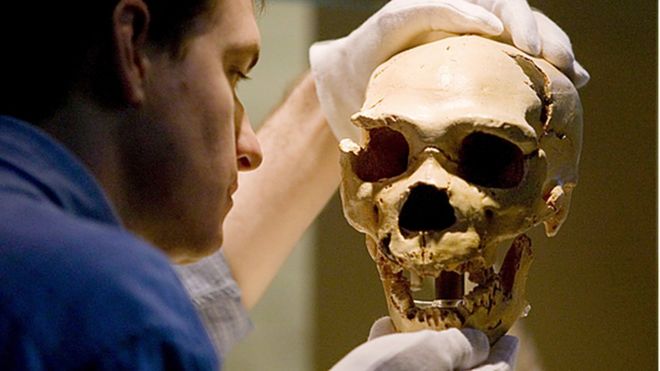 Neanderthals dosed themselves with painkillers and possibly penicillin, according to a study of their teeth.
 He may also have been using penicillin, long before antibiotics were developed.
The evidence comes from ancient DNA found in the dental tartar of Neanderthals living about 40,000 years ago in central Europe.
Microbes and food stuck to the teeth of the ancient hominins gives scientists a window into the past.
By sequencing DNA preserved in dental tartar, international researchers have found out new details of the diet, lifestyle and health of our closest extinct relatives.
"Their behaviour and their diet looks a lot more sophisticated and a lot more like us in-read more
JOHN RODERS HIP HOP MUSIC PRODUCER
COMEDYFRIENDLYZOMBIE Thanks for following. My name is John Rodgers and I
am a Hip-Hop music producer. I believe if you focus on your passion,
goals, and dreams "Once A Day" anything is possible. I love making
beats. It's therapeutic, sometimes I zone out for 15 hours straight with
out realizing it. I call it time traveling. That's how you know you
love what you do.
This is a link to download a free beat as promised.
http://www.once-a-day-beats.com/free-download.html …
Listen to The B Vitamins Vol. 1 by @onceadaybeats
https://soundcloud.com/onceadaybeats/sets/the-b-vitamins-vol-1-by-onceadaybeats …
I also just started doing Featured Artists http://www.once-a-day-beats.com/featured-artists …
If you are interested in being a featured artist, it's easy to sign up here:
http://www.once-a-day-beats.com/featured-artist-sign-up.html …
If you like to just listen check me out on Spotify
https://open.spotify.com/album/0jasic5CUZwm8t22k0AHq0 …
Subscribe to:
Posts (Atom)
Lawmen Bass Reeves
*Lawmen: Bass Reeves* is a compelling, albeit uneven, entry into the modern Western genre. As a series that carries the weight of a legenda...

-
Jump directly to the content YOUR SUN Sign in EDITIONS Scottish Sun Irish Sun Sun Bets Sun Bingo Dream Team ...
-
Skip to content CLOSE SEARCH Search for: SOCIAL PROFILES Facebook Twitter Pinterest MENU Cambridge ...


